StrategyNovember 3, 2026 · 9 min read
Selling a Treatment Center: Marketing Due Diligence
Ethan Sweet
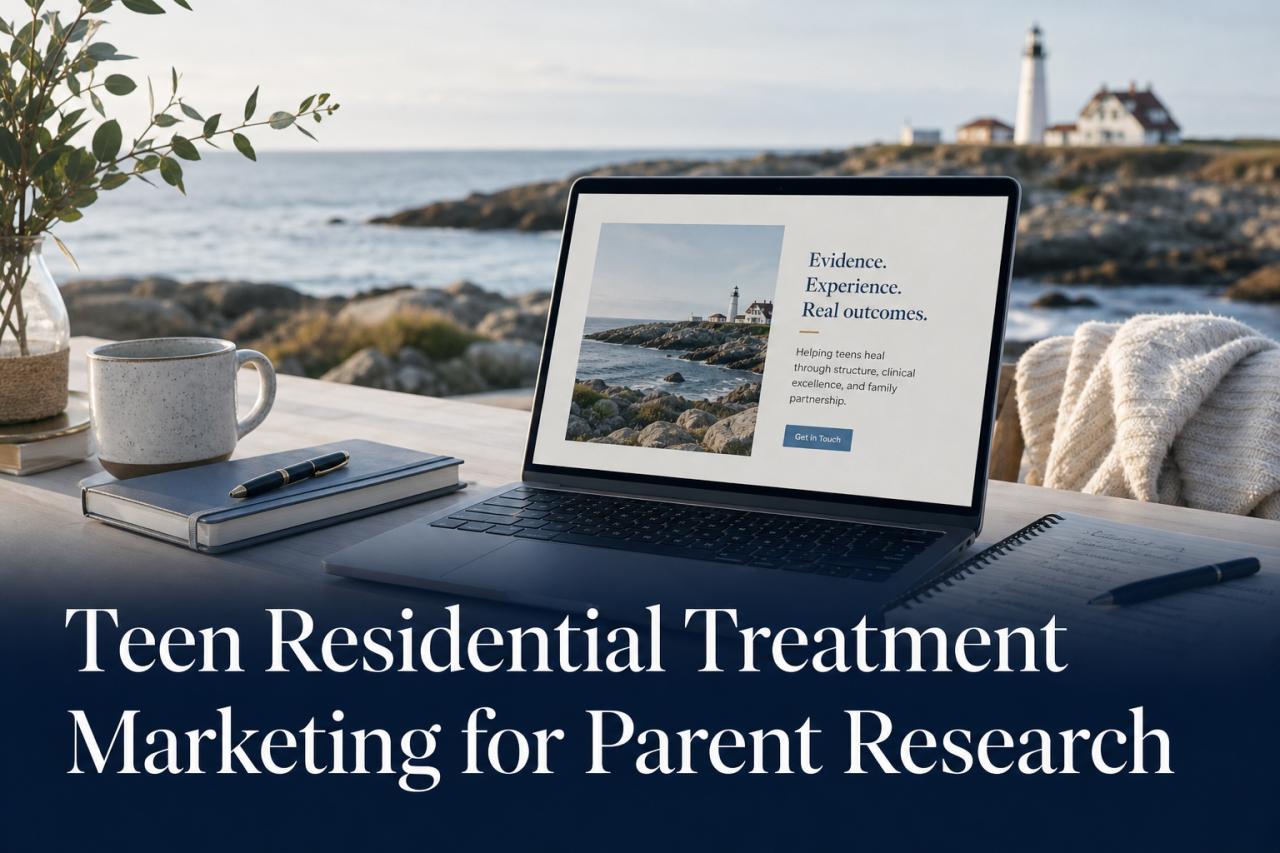
You'll see how parents vet an adolescent residential program over several days, and what your pages, ads, and call tracking need to show them before they ever dial.
A skeptical parent will check your licensing, school accreditation, visitation rules, and staff over several days before calling, and your site has to hold up each time. Parents aren't comparing slogans. They're cross-checking your claims against state records and everything they've read about troubled-teen programs. Every page that puts that proof in front of them quickly makes a first phone call more likely, which is the core of teen residential treatment marketing.
The person typing "residential treatment for teens" into Google is almost never the teenager. It's a parent, often a mother or father who has already spent a week reading about adolescent programs and doesn't trust what they've found. Troubled-teen press taught them that a polished admissions page can hide a lot, so they verify before they dial.
That verification happens in stages, usually across several sessions. One evening they check your state licensing record and see whether the license type matches what your site says. Another day they look at school accreditation, because a teen who misses months of coursework creates a second problem for the family. Later they read your visitation and family communication policies, then your clinical staff bios, and sometimes they compare all of it against reviews and news coverage.
Your marketing has to work for that timeline. A parent who leaves your site on Tuesday and returns on Friday should find the same licensing details, the same staff names, and the same policies, without hunting through a PDF or a vague "accredited" badge. When a claim on your site differs from a state record, the parent notices, and they don't usually tell you before they leave.
For your admissions team, this changes what a first call sounds like. A parent who has done this much research often arrives with specific questions about supervision ratios, phone contact with their child, and how schoolwork continues. They're not asking for a sales pitch. They want to hear that your answers match the pages they already read.
Your site, your search presence, and your intake script need to tell one consistent story.
A parent comparing adolescent programs wants to see, in plain text on the page, who supervises their child overnight and how a school day works inside your program. If those answers sit behind a "call for details" button, many parents will assume the details don't hold up and move to the next program on their list.
On safety, publish what a parent would otherwise have to ask. That means your license type and number, how staff are scheduled across shifts, how you handle restraint and seclusion, and what the process is when a parent has a concern about their child. State the visitation schedule and phone contact rules directly, including what happens during a child's first days in care. Parents who've read troubled-teen coverage look for exactly these policies, and vague language reads as a warning sign.
On academics, parents need to know whether their teen keeps earning credit. Name the school accreditation and who grants it, say whether credits transfer to the home school district, and describe how teachers coordinate with the clinical team. Mention how you obtain coursework from the teen's current school and what a typical school day looks like on campus.
These details belong on dedicated pages, not buried in an FAQ. A clear page for safety and supervision and another for academics give search engines distinct topics to rank and give parents something specific to return to on day three of their research. Our web development work treats these pages as admissions infrastructure for that reason.
Have your clinical director and school coordinator review the wording so the page matches what staff say on a first call.
Hillside Horizon, a teen residential program, was admitting roughly one teen a month while spending $15-30K on paid search. Paid traffic brought clicks, but a parent who's cross-checking licensing and visitation policies over several days doesn't convert on the first ad visit. Our Hillside Horizon case study shows what we changed.
We built the organic side so a returning parent kept finding answers. Monthly organic visits grew from 557 to 6, 074, and top-10 keywords rose from 140 to 1, 119. That means the program showed up for far more of the specific searches parents run midway through research, beyond the broad "residential treatment for teens" query. Those searches tend to be narrow, such as how a program handles schooling or what family contact looks like, and each one is a chance to be the page that gets bookmarked.
Monthly admits then rose to 4 to 6. We can't attribute that to one tactic, because paid search, organic content, and the admissions team's follow-up all worked on the same parents. What we can point to is the call record. CallRail tracked 6, 549 calls, so the admissions team could see which pages and searches produced conversations and where parents were asking the same questions repeatedly.
For your own program, the useful takeaway is the order of work. Fix the proof pages first, then build search coverage around the questions parents ask, then use call data to tighten both. Spending more on ads before your licensing, academics, and safety details are easy to find mostly buys more first visits from parents who leave to verify you elsewhere.
Read the call recordings or notes before you change your pages. Parents tell your admissions staff exactly which detail they couldn't find.
Whether your ads need LegitScript certification depends on what your domain says, not on how your program describes itself internally. Google Ads, Microsoft Advertising, and Meta require LegitScript addiction treatment certification in the US before you can advertise substance use treatment, detox, residential rehab, or MAT. If SUD services appear anywhere on your domain, that requirement covers the whole domain, including the pages written for parents of a teen with anxiety or depression.
RELATED READING
A program that treats adolescent mental health as its primary focus and doesn't offer or advertise SUD services doesn't need LegitScript on Google Ads. Healthcare targeting rules still apply. Google's healthcare policy prohibits personalized targeting on health conditions, so remarketing and customer match lists built around a teen's diagnosis aren't available to you.
Dual-track programs face the harder decision. If your campus treats both, you have two workable paths:
Check this before you build campaigns, because an account suspension in the middle of a spend ramp takes weeks to untangle and interrupts the parent research cycle you've been building toward.
Messaging needs to change too. A parent searching for help with a teen's self-harm or school refusal expects clinical language about that condition. A parent searching about vaping or cannabis expects something different. Mixing the two on one landing page muddies both the ad review and the parent's trust.
Have your admissions director confirm which services you can truthfully advertise today before anyone writes ad copy.
A Google Business Profile belongs to a staffed, state-licensed physical location with signage, so every campus that holds its own license can have a profile and a campus without one can't. Virtual offices, admissions-only suites, and unlicensed addresses violate Google's rules, and a suspended profile removes you from the map results parents check while cross-referencing your license.
Parents compare what Google shows against your state record. If the campus name, street address, and phone number on the profile differ from your licensing listing or your website, the mismatch looks like the kind of inconsistency they're already watching for. Keep your name, address, and phone number identical across the profile, your site footer, and every directory that lists you.
Your organization, not an agency or a former employee, should hold primary ownership of each profile. Add the agency as a manager instead. Ownership problems usually surface when someone leaves, and recovering a profile can take weeks.
Phone numbers need a plan. Use CallRail dynamic number insertion on your website so you can see which pages produce calls, but keep the number on the Google Business Profile itself consistent with what's listed elsewhere. Swapping it for a tracking number creates the mismatch you're trying to avoid.
Before you publish a campus profile, confirm the following:
When parents leave reviews, reply without confirming that anyone was a patient or a resident. Under HIPAA and 42 CFR Part 2, a public reply that acknowledges care can disclose protected information, so thank the reviewer generically and invite them to call.
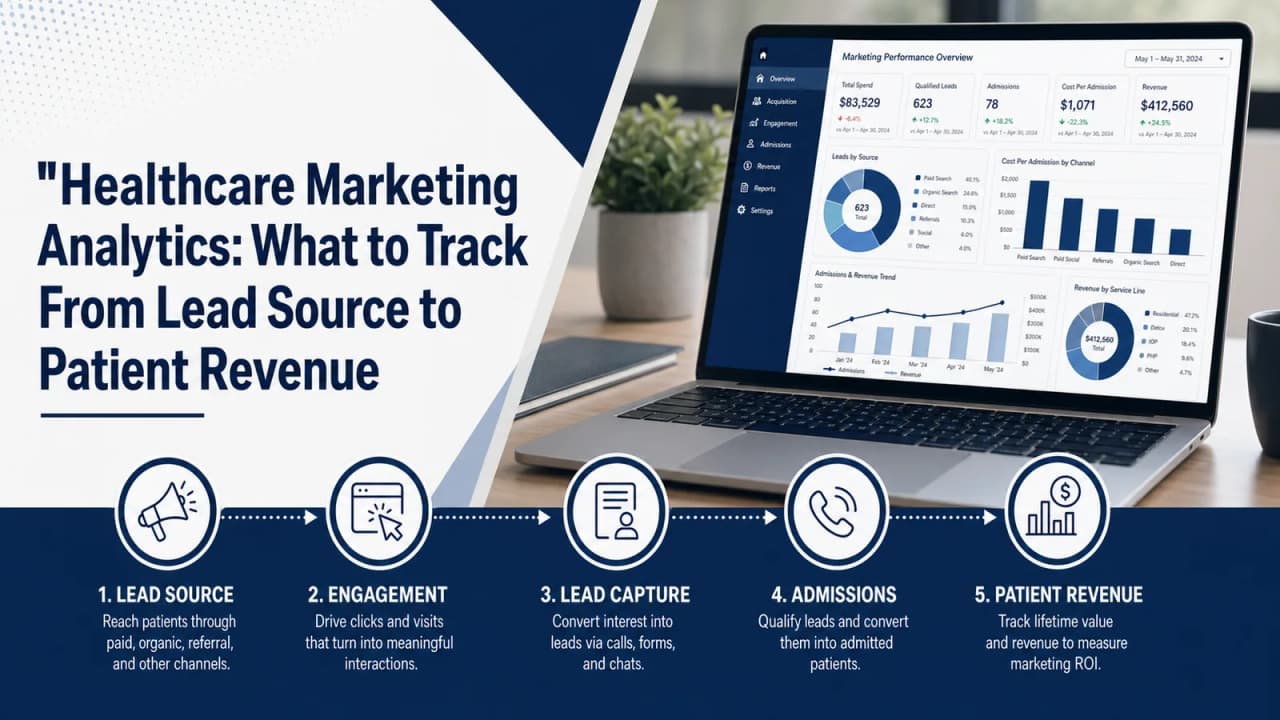
A parent's verification of benefits call is the moment your marketing data and your clinical privacy rules collide, because the caller shares a child's name, diagnosis, and member ID while your ad platform is waiting for a conversion signal. Keep all of that out of the signal. Your tracking should record that a qualified call happened, when it happened, and which click started it.
CallRail dynamic number insertion on your site shows which page or campaign produced each call. Your admissions team then marks the call with a stage, such as VOB started or admitted, in your CRM or call log. Only that stage label travels back to the ad platform.
For Google Ads, offline conversion imports match on a captured GCLID inside Google's 90-day GCLID window. Upload only the GCLID, the conversion name, the timestamp, and an optional static stage value. Leave out the teen's name, diagnoses, and member ID. Per HHS OCR tracking guidance, third-party pixels shouldn't transmit PHI without a BAA and authorization, so avoid placing them on VOB forms or pages where a parent describes a child's condition.
Be careful with Performance Max and Demand Gen. If they count every call as a conversion, bidding learns to chase wrong numbers and out-of-state inquiries your program can't admit. Import only calls your team has marked as viable VOBs.
No platform or analytics tool is "HIPAA compliant" on its own. Vendors sign BAAs where they handle PHI, and your team configures workflows that keep PHI out of ad accounts.
Before you change anything, ask your admissions director to define what counts as a viable parent VOB call. If you'd like a second set of eyes on your call tracking, book a free strategy call or reach Sweet Media at (714) 503-8548.
About the author

Ethan founded Sweet Media to give behavioral health facilities an agency that speaks the language of treatment — and measures success in admissions, not impressions.
CONNECT ON LINKEDINIn this article
Tags
CONTINUE READING
StrategyNovember 3, 2026 · 9 min read

BlogJuly 1, 2026 · 10 min read

StrategySeptember 24, 2026 · 12 min read

StrategyApril 28, 2026 · 8 min read
StrategyApril 28, 2026 · 8 min read
StrategyApril 28, 2026 · 9 min read
MORE FROM STRATEGY
VIEW ALLTeen & parent search playbook
We build parent-intent search pages, compliant paid campaigns, and CallRail admission tracking for adolescent residential and outpatient programs.