


Paid MediaNovember 14, 2026 · 9 min read
Performance Max for Rehab Centers: A Decision Gate
Ethan Sweet

You'll see whether Microsoft Ads belongs in your paid search mix, what you have to clear before it can run, and how to audit a Google import before it spends.
Bing ads for rehab centers can pay off once your facility holds LegitScript certification, because Microsoft Advertising won't run addiction treatment ads without it. After that, you're buying clicks from a smaller audience than Google's, but many of those searchers are parents and spouses researching residential care on work Windows laptops. Competition for those clicks is usually lighter, so your cost per call can come in lower when the account is built carefully.
Microsoft Advertising applies its Pharmacy and Healthcare policy to US addiction treatment advertisers, and that policy requires LegitScript certification before any ad for detox, residential rehab, or MAT can run. If substance use treatment appears anywhere on your domain, the requirement covers the whole website. Mental health programs that don't advertise SUD services sit outside this rule, though a dual diagnosis site usually doesn't.
Most operators who already advertise on Google have likely cleared this hurdle, since Google Ads and Meta ask for the same LegitScript certification. Before you build anything in Microsoft Advertising, confirm a few things with whoever manages your certification. Check that the legal entity and domain on the certificate match what you'll enter in the account, and that your landing pages sit on the certified domain rather than a separate call-tracking or microsite domain.
If you're still working toward certification, our post on LegitScript addiction treatment certification walks through the process. Finish it before you build the Microsoft account, because ads for addiction treatment can't run without it.
Once the account is approved, the real work begins, and it starts with how you set up campaigns rather than copying them over from Google.
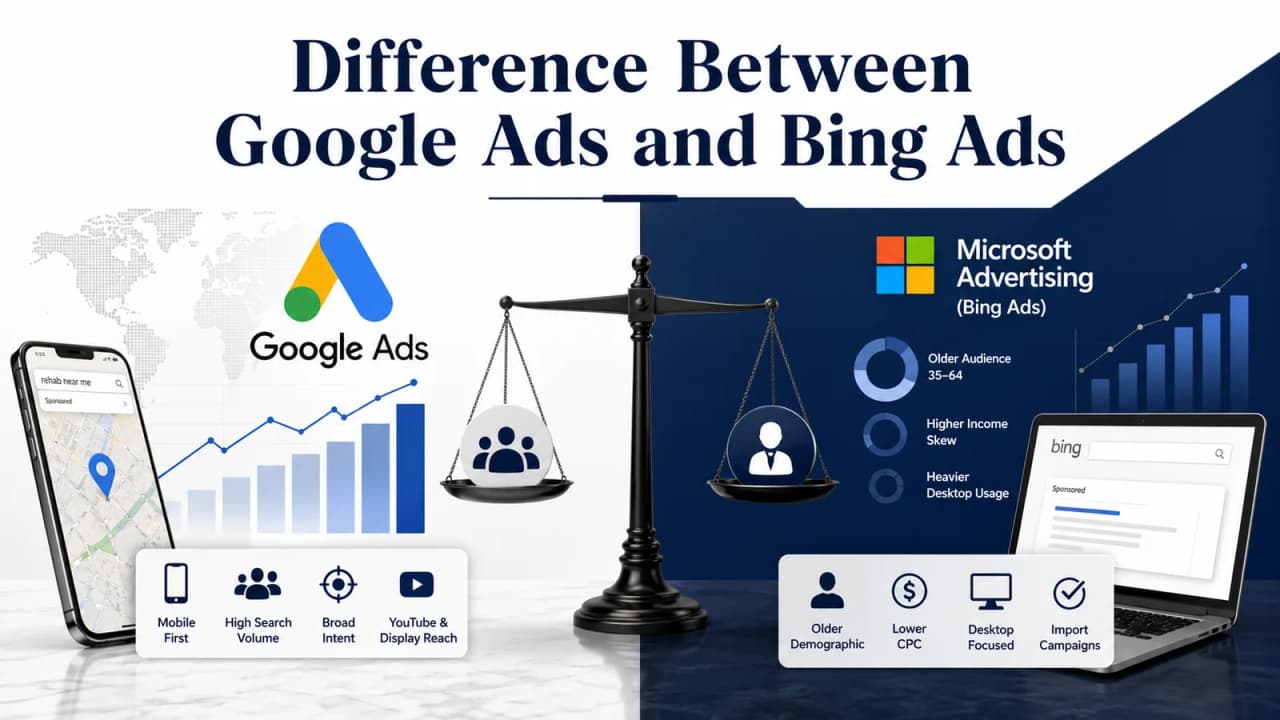
The people most likely to find your residential program through Microsoft Search are parents, spouses, and other family members researching on a work or home Windows computer. Windows machines ship with Edge and Bing as the defaults, and many people never change them. A mother looking up residential options between meetings is often typing into Bing without having chosen it.
That matters because residential decisions are made by families over several days or weeks, not in a single crisis search. The person comparing programs usually reads clinical pages, checks how admissions works, and returns more than once before dialing. Your ads and landing pages should serve that slower reader. Lead with what a family needs to decide: level of care, how a call with admissions goes, and how to verify insurance.
Bing's audience is smaller than Google's, so you won't find the same keyword volume. Expect fewer impressions and plan the account around that. Tight campaigns built on residential and family-intent terms usually work better here than a broad net, because every wasted click takes a bigger share of a smaller budget.
Detox and PHP searches tend to be urgent and mobile-heavy, and mobile skews toward Google. Treat Bing as a channel for the considered, desktop-driven residential inquiry rather than the middle-of-the-night crisis call.
You can check this against your own data instead of assuming it. In Microsoft Advertising, break out performance by device and time of day, then compare weekday business hours against evenings. If your calls cluster on desktop during working hours, you're reaching the family researcher this channel is good at finding.
Microsoft's import tool will copy your Google campaigns in a few clicks, and the settings that come along are the ones most likely to waste money. Review them before you set a budget or enable anything.
Start with match types. Broad match imports as written, and it can stretch into loosely related queries. For a rehab account, that means clicks from people looking for free meetings, job listings, or unrelated health topics. Move to phrase and exact match on residential and family-intent terms, then add negatives for those categories before launch.
Next, look at the search partner network. It syndicates your ads onto other sites, and that traffic is harder to judge than Bing's own results. Turn it off at the start. If you want to test it later, give it a separate campaign so its calls can be measured on their own.
Location settings deserve the most attention. The default targets people in or searching for your chosen area, so someone anywhere in the world who types a city name can trigger your ad. Switch to people in your target location, and confirm the radius or state list copied correctly.
Finally, check what the import skipped or changed:
Because the imported structure came from Google, it won't reflect how Bing families search. Treat the import as a first draft you'll rewrite, not a launch-ready account.
RELATED READING
A Bing click only counts for your census once you can tie the phone call back to the ad that produced it. Start with call tracking on the certified domain. CallRail dynamic number insertion swaps the number on your site based on the visitor's source, so Bing traffic gets its own number and your admissions team can see which campaign rang the phone. Keep the number in your Google Business Profile consistent with your main line so local listings don't conflict.
Next, set up the Microsoft Universal Event Tracking tag to record a call click or form submission as a conversion. Send only non-identifying events. No names, diagnoses, or insurance member IDs should pass into the ad platform, and your tracking vendor should sign a BAA before any tag touches a page where a visitor could enter health details.
Then close the loop with offline conversions. Microsoft Advertising lets you upload a click ID with a conversion name, timestamp, and an optional static value once admissions confirms a call was a viable lead or an admit. That teaches bidding to chase calls that become census instead of wrong numbers, job seekers, and out-of-network inquiries you can't serve.
Your admissions director holds the missing half of this data. Ask them to log each call's source and outcome in a shared sheet or CRM stage, even if it's only "qualified," "verified insurance," and "admitted." Review it weekly against Microsoft's reports.
Bing's volume is low enough that a handful of mislabeled calls can distort the picture. Give the channel a few weeks of clean data before you decide what it's worth.
Your cost per click on Microsoft Ads comes from three things you control: how tightly you target, how strong your landing pages are, and how many competitors bid on the same terms. The first two are in your hands. Bing usually has fewer bidders on residential and family-intent keywords than Google does, which is why clicks can cost less, but the account only benefits if the imported settings were cleaned up first.
Because volume is limited, set the budget around the number of calls you need to judge the channel, not around a share of your Google spend. Work backward from your admissions process. Take the call-to-admit rate your team already tracks, decide how many qualified calls would tell you the channel works, and fund the account long enough to collect them. Our ad budget calculator can help you estimate that range from your own close rates.
Start with a cap you can sustain for several weeks, then raise it only when calls are qualifying. Watch these in the first month:
Cost per call, and the share of calls that admissions marks as viable.
Impression share on your residential terms, which shows whether budget is the limit.
Search terms reports, so you can add negatives weekly while volume is low.
Keep bids manual or capped until you've collected enough conversions for automated bidding to learn from. Once offline conversions are flowing, move toward bidding that favors qualified calls.
Don't judge Bing against Google on cost per click alone. A cheaper click that produces fewer admits costs more per admission. Compare the two channels on cost per qualified call and cost per admit, using the same definitions on both sides.
Rize OC, an addiction rehab, scaled paid media from $10K to $300K a month across Google, Bing, and Meta, and its cost per acquisition fell 67%, from $350 to $115. That drop came while spend grew thirtyfold, which is the result most operators expect to go the other way. The account also logged 15,095 tracked CallRail calls, so every channel could be judged against real phone activity instead of platform-reported clicks.
You can copy the sequence without copying the budget. Add Bing only after Google is tracking calls cleanly, because a second channel on a weak measurement base just doubles the guesswork. Give it a capped test budget, review the search terms weekly, and compare it to Google on cost per qualified call. Scale it only if the admits follow.
If you'd like a second set of eyes on your Microsoft Ads setup, our paid media team can review your account structure and tracking. You can also read the full Rize OC case study for the channel breakdown. To talk through your own account, call (714) 503-8548 or request a free media audit.
About the author

Ethan founded Sweet Media to give behavioral health facilities an agency that speaks the language of treatment — and measures success in admissions, not impressions.
CONNECT ON LINKEDINIn this article
Tags
CONTINUE READING
Paid MediaNovember 14, 2026 · 9 min read
Paid MediaApril 28, 2026 · 8 min read

Paid MediaNovember 9, 2026 · 10 min read
Paid MediaApril 28, 2026 · 9 min read

Paid MediaApril 28, 2026 · 13 min read

Social MediaNovember 13, 2026 · 9 min read
MORE FROM PAID MEDIA
VIEW ALL

Google Ads & VOB playbook
We run LegitScript-ready Google Ads with weekly search-term audits and CallRail offline conversion imports tied to verified insurance checks.