


Social MediaSeptember 26, 2026 · 12 min read
LinkedIn Marketing for Treatment Centers: Referrals Over Facebook Ads
Ethan Sweet
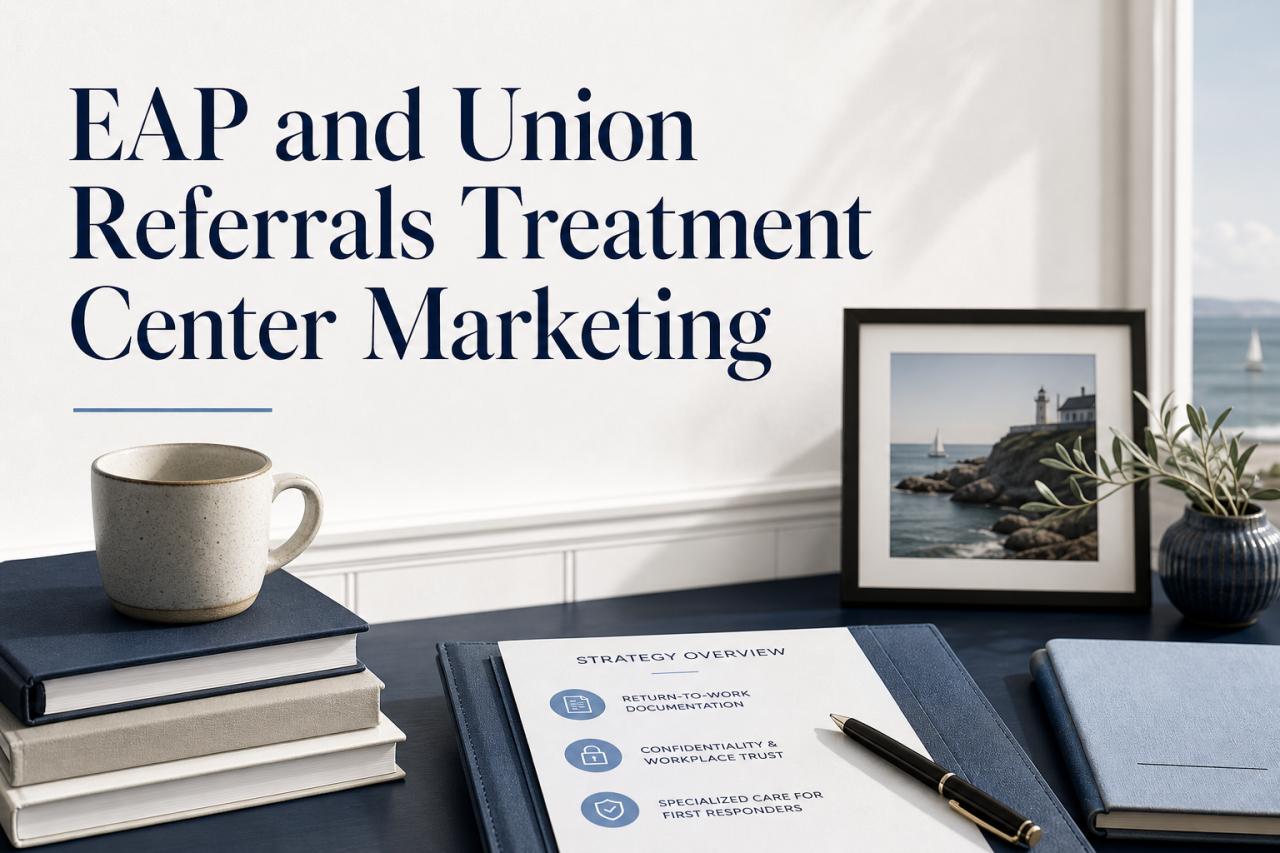
You'll see what a benefits manager checks on your website and LinkedIn before sending a member, and which gaps cost you the referral.
The benefits manager who took your brochure at the union hall will look you up before sending a single member, and that's where most referrals stall. They're checking for return-to-work documentation, workplace confidentiality, and a clinical track built for first responders or professionals. If those answers aren't visible in about two minutes, the referral often goes to the next facility on the list.
A field rep's brochure earns you a name on a list, and the website decides whether that name stays there. Benefits managers at Employee Assistance Programs, union trust funds, and municipal peer-support teams are accountable for every member they refer. Before they pass along a facility, they want something they can point to if a supervisor or trustee asks why that program was chosen.
The visit usually follows a pattern. Someone types your facility name into a search bar, lands on your homepage, and looks for a page that speaks to their population. A generic "Programs" menu with one paragraph on addiction and one on mental health doesn't answer a question like "Do you have a cohort just for police and firefighters?" If they can't find it, they won't call your rep to ask.
Then they check LinkedIn. They look at whether your clinical director and your leadership team have visible profiles, and whether those profiles match what your brochure claimed. A thin or abandoned company page reads as a facility that hasn't done this kind of work before.
Four things get checked most often:
Each of those needs a plain, findable answer on your site. Your industries page is a natural home for the track overview, and the supporting detail belongs on its own page for each population you serve.
Your admissions team can't fix a lost referral they never knew existed. That's why the website has to carry the proof before your rep ever follows up, and why the later sections cover tracking those visits back to the outreach that caused them.
Paperwork turnaround is the first thing a benefits manager tests, because a member who can't return to work on time becomes the manager's problem. Duty-fitness and FMLA forms decide whether a firefighter keeps a position or a nurse keeps a license, so reviewers want to know who completes them, how quickly, and what the member signs first. Put that process on a page in plain language, naming the role that handles the forms, such as a case manager or clinical director, instead of saying "our team will assist."
Confidentiality gets the second look, and it's where vague copy costs you the most. A union trustee wants to see that the employer isn't told about treatment without the member's written consent, and that your intake process explains who can receive information. Write this as a short explanation of how releases work on your site, because members and coordinators will both read it before anyone calls.
Cohort structure comes next. Reviewers look for a stated separate or trauma-informed track, since a police officer sitting in group beside someone he arrested is a real concern for peer-support coordinators. Describe how the cohort is organized and who leads it, and leave out adjectives that can't be checked.
Payment readiness rounds out the review. Say plainly which of the plans these groups use you're in-network with, and state that you'll open a single-case agreement when you're not. Insurers authorize residential stays through ongoing utilization review, so don't imply fixed 30, 60, or 90 day blocks in this copy.
A clinical one-pager can hold all four answers in a form a coordinator can forward to a trustee. Keep your claims specific enough that your rep can defend every line in a meeting, because anything the page overstates is the first thing a careful reviewer will test on the phone.
A single page for each population gives a benefits manager one link to forward, and it gives your field rep something to say at the next union meeting: "The details are on our firefighter track page." Folding every group into one shared "Specialty Programs" page forces the reviewer to dig, and most won't.
RELATED READING
Start each page with the population's own situation. A paramedic carries repeated exposure to trauma and works rotating shifts. A licensed nurse or attorney may fear a board report more than the diagnosis itself. Name the concern in the first paragraph, then describe how your program responds, such as a separate cohort, clinicians trained in occupational trauma, or a scheduling plan for members on shift work. Only include what your clinical team actually delivers.
Below that, build the page around the four things reviewers check. Give the paperwork process, the confidentiality and release explanation, the cohort structure, and the payment pathway their own short headed section. A coordinator skimming on a phone should reach each answer in one scroll.
Pages like these also need a visible next step for the referral source. Add a downloadable clinical one-pager, a direct line to admissions for coordinators, and a request form that doesn't ask a member to enter diagnosis details. Keep health information out of any web form and out of third-party tracking tags, since a pixel that captures condition-related fields creates a privacy problem you'll then have to fix.
Link the track pages from your industries page and from your program pages so they're reachable through normal navigation. If you run PHP or IOP tracks for working professionals, point those pages to each other, and see how PHP and IOP marketing handles level-of-care pages that need clear next steps.
A benefits manager who gets your brochure at a union hall will often search your clinical director's name on LinkedIn before they open your website a second time. What they find there should match what your rep said in the room. If the brochure mentions a first-responder cohort, the director's profile should say who leads it and what clinical work sits behind it.
Start with the profiles of the three or four people a coordinator would want to trust: the clinical director, the executive who signs agreements, and the admissions or BD lead. Each profile should state the role, the populations served, and the level of care in plain terms. Skip adjectives. A coordinator is checking whether a real clinician stands behind the track, so a clear headline and a current role do more than a long personal story. Our post on LinkedIn marketing for treatment centers covers how leadership posting works for a facility, and our social media services page shows how we support it.
Post about the work itself, such as how your team handles duty-fitness paperwork, how releases work, or how a cohort is run. Never use identifiable patient or alumni media without written authorization, and don't confirm that anyone was treated. Those posts give a reviewer something to read after they search your name.
The one-pager is what your rep leaves behind and what the coordinator forwards to a trustee. Keep it to a single page with these elements:
Host the same one-pager as a download on the matching track page, so a rep's printed copy and the website say the same thing. Have your clinical director read it before it goes out, because the first careful reviewer will test every line.
Give every outreach channel its own tracking number, and you'll finally see which union hall, EAP meeting, or peer-support presentation produced a real call. Without that, a referral coordinator's call lands in the same bucket as a Google search, and your BD team can't show which events deserve a repeat visit.
Set up one CallRail number for the one-pager, one for each track page, and one for the LinkedIn profiles your leadership team uses. Keep your Google Business Profile phone number consistent with the main number on your site, and let dynamic number insertion handle the website. Printed materials get a static tracking number that routes to the same admissions line, so your team answers every call the same way.
Calls only tell part of the story. A coordinator may phone twice, forward the one-pager to a trustee, and send a member three weeks later. Ask your admissions team to log the referral source, the call date, and the outcome in your CRM, using a short drop-down rather than free text. Tracked calls should never carry a member's name or diagnosis into an ad platform or analytics tag, so keep those details in the CRM, where your team controls access.
Review the numbers monthly with your BD director and admissions director in the same meeting. Look at calls by source, the share that were referral-source calls versus member calls, and how many became verified benefits or admits. A union presentation that produces three calls and one admit tells you more than a hundred page views from the same week.
If you want a second set of eyes on how your track pages, LinkedIn presence, and call tracking connect, reach our team and we'll walk through it with you. You can also call Sweet Media at (714) 503-8548 or book a free strategy call.
About the author

Ethan founded Sweet Media to give behavioral health facilities an agency that speaks the language of treatment — and measures success in admissions, not impressions.
CONNECT ON LINKEDINIn this article
Tags
CONTINUE READING
Social MediaSeptember 26, 2026 · 12 min read

StrategyNovember 15, 2026 · 9 min read

StrategyNovember 8, 2026 · 9 min read

StrategyNovember 3, 2026 · 9 min read

StrategyNovember 2, 2026 · 13 min read
StrategyOctober 30, 2026 · 11 min read
MORE FROM STRATEGY
VIEW ALLRehab SEO & pricing playbook
We scope month-to-month rehab SEO around your campus count, metro competition, and levels of care after a five-day audit.